
Little Kanawha Conservation District worried about losing local control over dams
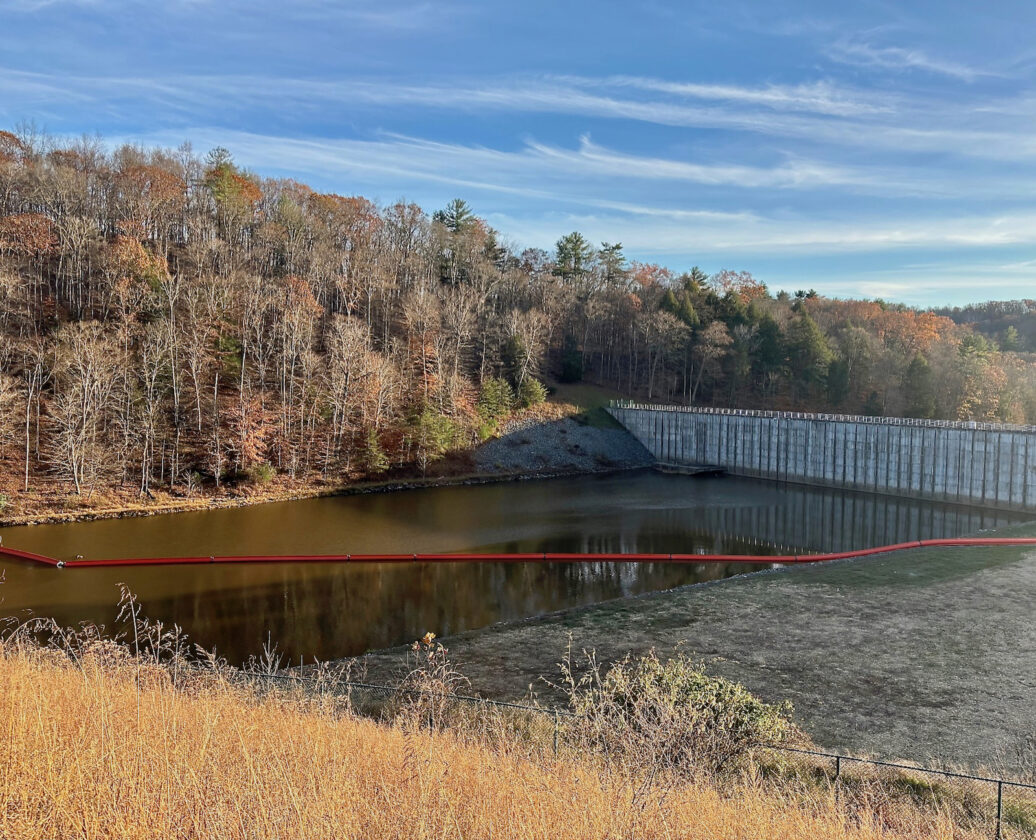
The North Fork Hughes River Site 21c Dam in Ritchie County is once of six dams overseen by the Little Kanawha Conservation District. A recent bill passed by the Legislature would move control to address maintenance issues with such dams to the West Virginia Conservation Agency in Charleston. (Photo provided)
PARKERSBURG – Officials with the Little Kanawha Conservation District are concerned recent legislation will take away local ability to respond to issues involving the district’s six watershed dams.
Representatives of the district said they’re concerned about what the passage of House Bill 5364, signed by Gov. Patrick Morrisey on March 27, will mean to West Virginia’s 170 dams as many of the duties handled by the state’s 14 conservation districts will be transferred to the West Virginia Conservation Agency.
“Many of these watershed dams protect downstream homes, farms, schools and entire communities,” Little Kanawha district supervisors said in a press release. “If the state assumes control and maintenance is delayed, neglected or improperly prioritized, the consequences could be catastrophic.”
The bill – which dealt with reforming numerous “outdated” boards and commissions and shifting a variety of duties – goes into effect on June 12.
Almost all of the conservation districts in the state have dams they are in charge of protecting, said Bob Buchanan, chairman of the Little Kanawha Conservation District.
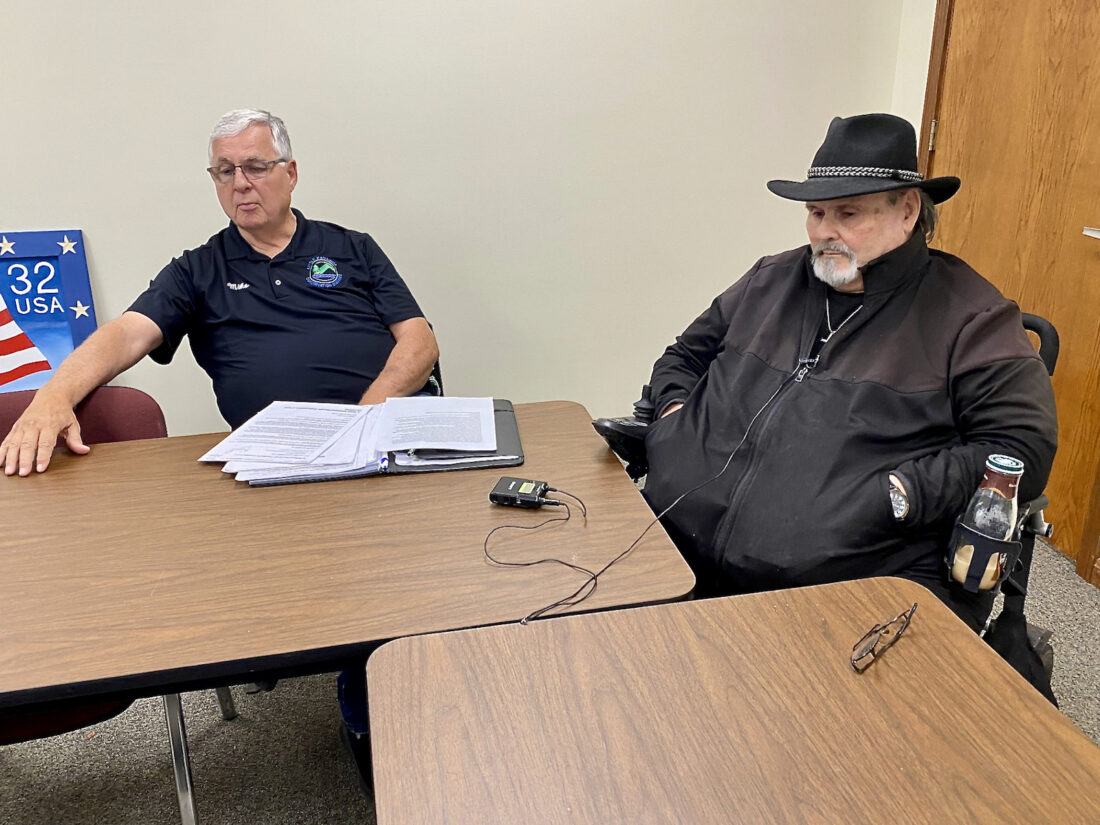
Little Kanawha Conservation District Vice Chairman Mike Nichols, left, and District Chairman Bob Buchanan talk about concerns they have about conservation districts statewide losing local control to address issues with dams to the West Virginia Conservation Agency in Charleston. (Photo by Brett Dunlap)
“Our job is to protect soil, natural resources and water,” he said. “We do the maintenance on the dams.”
Buchanan said the majority of the dams across the state are in “emergency status,” meaning they are beyond their 50-year plan and now require upgrades.
“We do updating and maintenance on our dams every year,” he said, noting they receive state and federal money to address different concerns. “For 50-60 years, the conservation districts (statewide) have been doing all the maintenance of those dams.
“Now, we are being told it will be better for the state to take it over.”
Buchanan feels the removal of any local control was the result of a conservation district objecting to a coal company doing underground, longwall mining work under the Upper Grave Creek Dams No. 7, 8 and 9 in Marshall County.
“Whenever the conservation district was alerted to this, they did everything they could to stop that from happening to the extent they were able to get the coal company to purchase a large liability policy to protect the area in the event if those dams would fail,” he said. “Those dams (failing) would put families, homes and businesses in jeopardy.”
The company ended up contacting people in leadership positions within the West Virginia Legislature and the bill went through a number of different forms before the final version was voted on and signed by the governor. Buchanan said.
“Many (lawmakers) were not even aware of what was in the bill as (this part) was put clear at the end of the bill,” Buchanan said. “I think that happens a lot.”
Del. Vernon Criss, R-Wood, said the situation in Marshall County did play a role in the legislation, noting a brief shutdown of the mining work impacted 200-plus mining jobs. The change also gives the state agency that distributes money for dam maintenance more control over how those dollars are spent, he said.
Buchanan said there is support from some lawmakers to be able to come back, form committees and address this issue.
“Our intent is to make the citizens of West Virginia aware as they had no idea of what was happening,” Buchanan said.
The state taking over operations of the local conservation districts will require hiring more people and costing more money than under the current system, he said.
Local supervisors have more direct contact with citizens in the areas they oversee. They fear that will be lost if people have to deal with a centralized state agency. They were also concerned about how dam repair would be prioritized statewide and how money would be allocated to address needs. There were also concerns about increasing the size of state government.
These structures were engineered decades ago and require continuous, vigilant local monitoring, the Little Kanawha Conservation District supervisors said in the press release. A lapse in maintenance or delayed emergency response could result in severe flooding, devastation of agricultural land, major infrastructure damage, and–most critically-the potential loss of human life, they added.
A centralized agency would have to respond to the needs of 170 dams statewide while each conservation district responds to the ones in their own districts, Buchanan said. The Little Kanawha Conservation District covers Wood, Ritchie, Calhoun, Roane and Wirt counties.
“We can put together a plan, get the engineering, get the NRCS (Natural Resources Conservation Service, part of the United States Department of Agriculture) engineers to help us with what needs to be done and do it,” he said. “That has been the process.”
Buchanan said the they have worked with the West Virginia Conservation Agency in the past on projects. They can do the work, he said, but local conservation districts better understand the needs in their areas and address them. No one has yet reached out to them about the changeover, he said adding he believes there are attorneys going over paperwork about transferring easements.
“We don’t believe that will make anything easier,” Buchanan said. “It will be better for the citizens to contact us directly, like they always have.”
Michael Nichols, vice chairman of the Little Kanawha Conservation District and representing Ritchie County, said there are indications the West Virginia Conservation Agency have already begun hiring,
“The agency is going to be hiring more people and the bottom line is it is going to cost the taxpayer more money,” he said.
“They pack these bills where they put in some good things and there will be some bad things in and then they just pass it all,” he said. “The people of West Virginia need to know what is going on down there.”
Many conservation districts are made up of “common sense” people, Nichols said.
A number of the members of the Little Kanawha Conservation District said there are now problems with the dam in Marshall County that mining was occurring under with movement increasing the chance of failure.
Buchanan fears the conservation districts could end up being phased out with local people losing that local contact point.
“Once it is gone, it is ten times harder to ever get it back,” he said.
The conversation districts came about as a result of the Dust Bowl in the 1930s and the work of Hugh Hammond Bennett to prevent soil erosion and have brought about other conservation techniques.
Jeff McElfresh, one of the Wood County supervisors, said he is afraid this action is the beginning of phasing the conservation districts out.
Although they still have duties related to maintaining soil, with the dams being put under a centralized agency, he feels they state will begin to cut back on other duties and related funding until there will be no need for them.
“If we are cut out all the watershed matters and take the funding we have set aside for (operations and maintenance) work and they place that all in Charleston, there will not be one taxpayer that will be able to see what they are doing,” he said. “There will be no oversight.
“I believe they will cut the budget for our agricultural side and completely defunct us next. If that happens, agriculture will take a huge, huge, huge loss in the state of West Virginia.”
Contact Brett Dunlap at bdunlap@newsandsentinel.com
-
- The North Fork Hughes River Site 21c Dam in Ritchie County is once of six dams overseen by the Little Kanawha Conservation District. A recent bill passed by the Legislature would move control to address maintenance issues with such dams to the West Virginia Conservation Agency in Charleston. (Photo provided)
-
- Little Kanawha Conservation District Vice Chairman Mike Nichols, left, and District Chairman Bob Buchanan talk about concerns they have about conservation districts statewide losing local control to address issues with dams to the West Virginia Conservation Agency in Charleston. (Photo by Brett Dunlap)
Local 911±¬ÁϳԹÏ
Marietta City Council approves public works changes, tables Start Westward Monument legislation
Parkersburg City Council may change URA makeup
PARKERSBURG – Members of City Council will consider changing the makeup of the Urban Renewal Authority Tuesday ...
EVE Inc. pauses operations for at least 30 days during restructuring effort in Marietta
MARIETTA — EVE Inc. is pausing most operations for at least 30 days as the agency works to restructure ...
Former USW Local 2997, O. Ames employee picnic
PARKERSBURG – United Steelworkers Local 2997, formerly O. Ames Company Plant #2, will hold its annual picnic on ...

Voices of Valor: Danielski uses his experience to help others
Fire hydrant testing continues in Parkersburg
PARKERSBURG – The Parkersburg Fire Department will be flow-testing fire hydrants in the following areas May ...